
About
SAWABA FM RADIO as a Social Enterprise: Background, Origin, Philosophy, Vision & Mission.
Background
SAWABA FM RADIO in Hadejia, Jigawa State, Northwest, Nigeria, is a dynamic social enterprise established in 2018 with audience in most parts of Jigawa State and neighboring Kano, Katsina, Bauchi, and Yobe States. According to United Nations Development Program’s (UNDP) Multi-Dimensional Poverty Index (MPI) in 2022, the Northwest region has the largest population of individuals living in poverty in Nigeria, totaling 45.49 million. This figure is nearly equivalent to the combined number of people in poverty across the three southern regions and exceeds the total in the other two northern regions. Poverty rates are alarmingly high, with Sokoto experiencing rates up to 90.5%, Jigawa at 87.02%, Zamfara at 73.98%, and Kebbi at 72%.
The same report added that these socioeconomic challenges are further compounded by the region’s status as home to the largest proportion of out-of-school and multidimensionally poor children, widespread malnutrition, elevated maternal and infant mortality, low vaccination coverage, and significant environmental degradation, including the loss of land to desertification. It is also the hotbed of a decade long rural banditry that has killed thousands and displaced hundreds of thousands more with millions of dollars’ worth in damages to the local economy. Among the seven states in the region, only Kano and Jigawa are not affected by widespread banditry. Jigawa, however, is the second poorest state in the region, and its North-East senatorial zone, where SAWABA is located ranks among the ten poorest in the country.
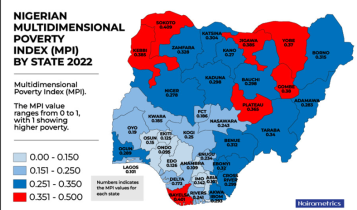
The National Population Commission (NPC) puts the population of Jigawa at 6.7 million in 2024. It records the highest under-5 deaths according to the Nigeria Demographic and Health Survey (DHS) 2023-2024, maintains a poverty rate of 87.6% (with rates reaching up to 91.4% in Jigawa North-East) (2), and includes approximately 1.13 million multidimensionally poor children. As the third poorest state in Nigeria and with a largely rural demography, Jigawa is located near the North-East region, which experiences the Boko Haram violent religious extremism.
Furthermore, while the total fertility rate in Nigeria is 4.8, Jigawa has 6.9 and the proportion of teenage pregnancies at 24.1%, both figures are the highest in the country, with the second least contraceptive use. Again, the state has the worst under-5 mortality rate at 161 per 1,000 live births, enabled by low immunization coverage – percentage of children aged 24 – 35 months fully vaccinated according to the national schedule is only 7.9; malnutrition – 41.9 % highest in the country; fever; acute respiratory infections; and diarrheal diseases.
Fundamental to these multi-dimensional development challenges are issues of corruption, ineffective governance, and deeply rooted social beliefs and practices, many of which stem from the misinterpretation of Islamic principles. SAWABA FM positions itself as a social enterprise committed to pursuing collaborative solutions to address these complex problems.
Origin & Philosophy
The word SAWABA means emancipation in Hausa. Hausa is the predominant language in the Jigawa State, Northwest Nigeria, and the entire northern part of the country. In the 50s and 60s, the word SAWABA had a political meaning in its usage as the motto of the radical Northern Elements Progressives Union (NEPU). NEPU was a left leaning radical political movement comprising mainly of the proletariats (locally known as the Talakawas) with the expressed aim of liberating them from the then colonial oppression and later exploitation by the native authorities and its administration in the aftermath of independence.
The chants of SAWABA as a word and its essence as a movement were accordingly synonymous with resistance, freedom, freewill, emancipation, cultural autonomy, and dignity and equality of all men and women through education, economic empowerment and personal agency.
However, the Talaka in Nigeria, most specifically in the North and Jigawa now enjoys total political freedom but sees such freedom as an end instead, and not as the means and basis towards personal agency and self-development. Today the Talaka has become his own oppressor through opportunistic and selfish behaviors in his politics and personal choices.
While it is unfortunately true that the Talakawas have been denied quality education and their prosperity stunted through long standing economic injustices. And that ignorance and poverty is eventually exploited by the predatory elite class to perpetuate and widen existing class and social gaps. This sole victimhood narrative is however of limited validity, and the Talaka must be challenged to participate in his own emancipation. Because under certain circumstances, and with some behaviors, the Talaka appears complicit in his own continuous dehumanization and oppression.
The thinking behind naming the radio station as SAWABA is to tap on the potency of the SAWABA movement and what it represented and use same to free the Talaka, but this time from himself. It seeks to connect these outlined social and political problems in Jigawa and Northern Nigeria with specific negative mindsets, cultural practices, and religious interpretations and demand the people to rise to free themselves from themselves through collective self-examination.
Vision & Mission
The primary focus of SAWABA Radio is to reconfigure these challenging mindsets that impact local development, educate, inform and enlighten the public.
Achievements
Sawaba Radio is now the predominant civic platform in entire Jigawa State where up to 7 million listeners and voices connect to educate, inform, and entertain. Its Facebook handle had 2.3 million views between the 19th to 25th of October 2025 alone.
Its dedicated programs on women empowerment and gender issues, ‘addini da rayuwa’ (religion and social development), health promotion and disease prevention, environmental protection, youth development, economic empowerment and self-reliance, education, and civic education through partnerships with leading international radio stations like the Voice of America (VOA) and Radio France International (RFI) – the British Broadcasting Cooperation (BBC) in view- have received acclaimed both home and abroad. It has become the leading independent information source in Jigawa and is regarded as an asset contributing to social transformation for millions of residents.